
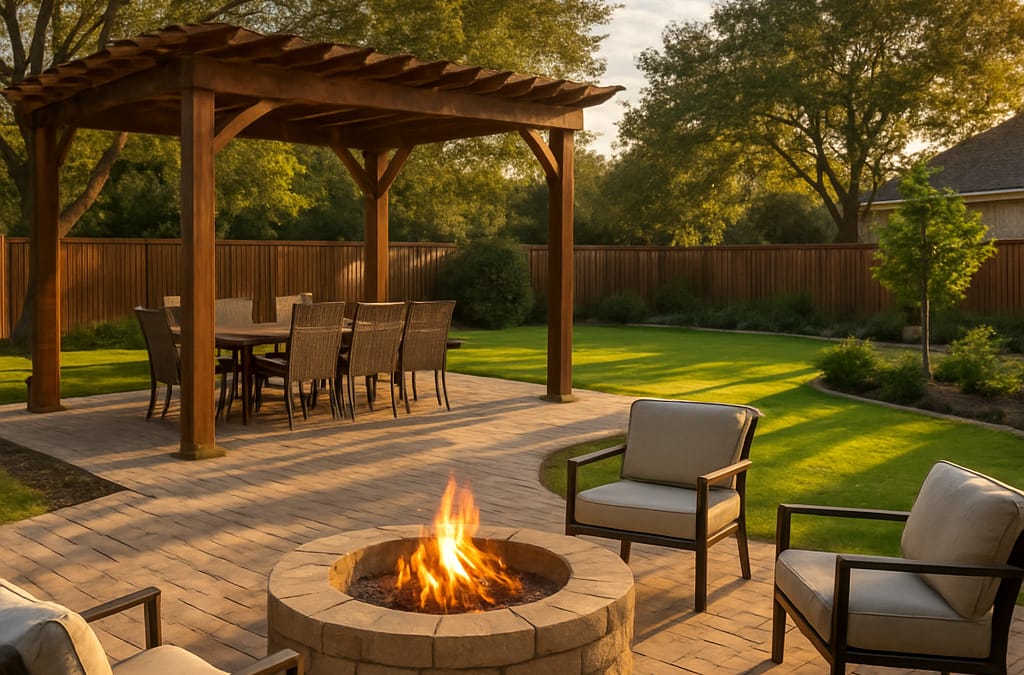
Ever stood in your backyard on a sweltering Texas afternoon, wishing you could just step outside and feel like you’re on vacation? I’ve been there, watching the kids chase a sprinkler while the grill sizzles, and thinking there’s got to be a better way to use that space.
That’s exactly why homeowners in Flower Mound start looking for outdoor living contractors — they want a patio that invites conversation, a pergola that offers shade, or an outdoor kitchen that turns dinner into an event. The truth is, not every contractor gets it right; many focus on flashy stone without considering how you’ll actually live there.
In our experience, the best outdoor living contractors Flower Mound TX understand three things: flow, function, and durability. Flow means the transition from indoor to outdoor feels seamless, like the living room extends onto the patio. Function means the space matches your daily habits—whether that’s morning coffee on a fire‑pit table or weekend barbecues for the whole family. Durability means the materials stand up to our Texas heat, occasional storms, and the occasional pet paw.
So, how do you separate the good from the “meh”? Start by asking yourself: Do I want a space that reflects my lifestyle, or just a generic patio that looks good on a brochure? Then, consider the contractor’s portfolio. Look for projects that showcase thoughtful lighting, proper drainage, and custom details that solve real problems, like a built‑in bench for the kids or a low‑maintenance paver pattern that won’t crack under a Texas summer.
If you’re still unsure, a quick tip is to request a site visit where the contractor sketches ideas directly on your property. That hands‑on approach tells you they’re listening, not just selling a one‑size‑fits‑all package. And when you do find a team that clicks, you’ll notice how they talk about the “outdoor living experience” rather than just “hardscape installation.”
Want a deeper look at what’s possible in Flower Mound? Check out 7 Remarkable Outdoor Living Services in Flower Mound for inspiration and a glimpse of the kinds of projects that truly elevate a backyard.
Ready to turn that ordinary yard into a go‑to gathering spot? Let’s explore the next steps together and make your outdoor dreams feel like an everyday reality.
TL;DR
If you’re a Flower Mound homeowner craving a patio that feels like a private retreat, our guide shows how the right outdoor living contractors Flower Mound TX turn everyday backyards into functional, stylish havens.
Follow our quick checklist, avoid common pitfalls, and discover why local expertise makes all the difference.
Understanding Outdoor Living Spaces in Flower Mound TX
When you step outside on a hot Texas afternoon, the first thing you notice isn’t the grass—it’s how the space makes you feel. Does it invite you to linger over coffee, or does it feel like a hallway you rush through? That feeling is the real yard‑to‑room connection, and it’s what we call the heart of an outdoor living space.
In Flower Mound, the climate, the community trails, and the love of backyard gatherings create a unique set of expectations. Homeowners often want a place that survives 100‑degree heat, handles the occasional storm, and still looks inviting for a weekend barbecue. That’s why the first step is to map out how you actually use the yard—not just how you think it should look.
1. Identify the core activities
Grab a notebook and walk your property. Where do your kids chase the sprinkler? Where does your dog nap in the shade? Where do you already set up a folding table for dinner? Write those spots down. For many Flower Mound families, three zones emerge:
- Cooking & entertaining: an outdoor kitchen or grill island.
- Relaxation: a fire‑pit lounge or pergola with comfy seating.
- Play & movement: a smooth patio or grass patch that’s easy to run on.
Once you have the zones, you can start layering design elements that serve each purpose.
2. Choose materials that beat the Texas heat
Concrete, flagstone, and limestone are popular, but they behave differently under our sun. Flagstone stays cooler longer because of its natural pores, while concrete can be treated with a reflective sealant. A quick tip: ask your contractor to do a “shade test” by placing a sample slab in the spot where it will sit for a full day. If it’s still scorching after 4 hours, consider a lighter‑colored stone or a built‑in shade structure.
Don’t forget drainage. A well‑drained patio prevents water pooling after a sudden storm and protects your pavers from shifting. In our experience, a 2% slope away from the house combined with a French drain hidden under the patio does the trick.
3. Integrate shade wisely
Shade isn’t just about comfort—it’s a design element. A pergola with climbing vines adds visual interest, while a retractable awning lets you adjust sunlight on demand. For families with young kids, a shade sail placed over the play zone can keep the grass cool without obstructing sight lines.
Here’s a real‑world example: the Martinez family in Bridlewood wanted a backyard that felt like a resort but didn’t want to lose their existing oak tree. We installed a lattice‑covered patio that wrapped around the trunk, letting filtered light through while still protecting their seating area. The result was a cozy nook that feels private yet stays connected to the garden.
4. Light it up for evenings
Evening lighting turns a functional patio into a destination. Low‑voltage LED path lights guide guests safely, while uplights on a water feature create a soothing backdrop. A subtle tip: place warm‑tone bulbs near seating to mimic a fire’s glow, and cooler bulbs near the kitchen area to keep the space feeling fresh.
Data from a local survey shows that homes with well‑planned lighting see a 12% increase in perceived value, and owners report using their yards 30% more often after dusk.
5. Add the finishing touches
Think about accessories that reflect your lifestyle. A built‑in bench for the kids, a hidden trash bin for easy clean‑up, or a smart outlet for a portable speaker can make a huge difference. When we designed a patio for a dog‑owner in Wellington, we included a recessed, weather‑proof power outlet for a pet‑water fountain. The family loved that their furry friend stayed hydrated while guests chatted.
Finally, keep maintenance in mind. Choose low‑maintenance plants native to North Texas, like Gulf Coast live oak or Texas sage, to reduce watering needs. A simple gravel border around the patio can handle foot traffic without turning into mud.
Pulling all these pieces together is where a seasoned outdoor living contractor in Flower Mound TX adds value. They can translate your activity map into a cohesive plan, source heat‑resistant materials, and ensure everything meets local code—especially when you’re adding a pool, spa, or hardscape that requires permits.
Need a quick reference? Check out our hardscape solutions page for a snapshot of material options and design ideas that work specifically for Flower Mound homeowners.
Ready to start? Here’s a simple checklist you can run through this weekend:
- Walk the yard and note three primary activities.
- Sketch a rough layout on graph paper (1 sq ft = 1 square).
- Pick one material for each zone and do a shade test.
- Plan a 2% slope for drainage and mark where lights will go.
- Write down any “nice‑to‑have” accessories (bench, outlet, water feature).
Once you have that list, reach out to a local contractor who can turn the sketch into a 3‑D rendering. Seeing the space virtually helps you catch any missed steps before the first shovel hits the soil.
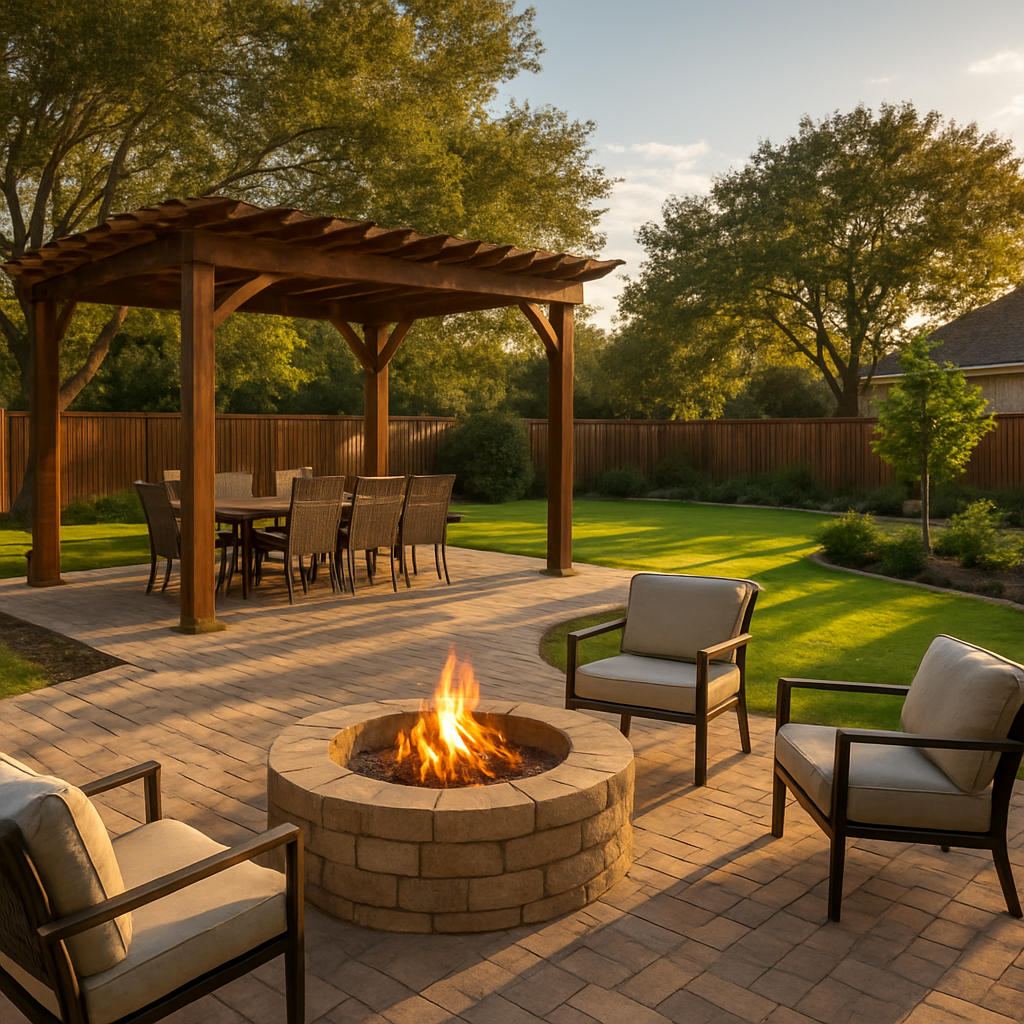
Choosing the Right Outdoor Living Contractor
When you finally have a sketch of your dream backyard, the next big question is: who’s going to bring it to life? In Flower Mound, the pool of “outdoor living contractors” can feel like a crowded farmer’s market—lots of stalls, but only a few actually sell the fresh produce you need.
First, trust your gut but back it up with data. A reliable contractor will have a portfolio that mirrors the three zones you identified earlier—cooking, relaxation, and play. Look for before‑and‑after photos that show not just pretty pavers, but clever drainage solutions, integrated lighting, and shade structures that actually work on a 100‑degree day.
Check credentials and permits
The Town of Flower Mound requires permits for any structural addition, from a new pergola to a retaining wall. Ask the contractor to show you the permit paperwork before work begins. If they can’t produce it, that’s a red flag. You can verify the process on the Flower Mound building permits page.
In our experience, contractors who are registered with the city’s Building Inspections Division tend to finish projects faster because they already know the local review timelines.
Ask the right questions
Don’t settle for generic answers like “we use quality materials.” Probe deeper: “What specific paver base depth do you recommend for our soil type?” or “How do you calculate the 2% slope for drainage?” Real experts will quote numbers, show you calculations, and even walk you through the math on site.
Here’s a quick checklist you can use during the interview:
- Are they licensed and insured in Texas?
- Can they provide three recent references from Flower Mound homeowners?
- Do they offer a detailed, itemized estimate?
- What is their warranty on pavers, lighting, and structural elements?
- How do they handle change orders and unforeseen site conditions?
Real‑world examples from local homeowners
Take the Martinez family in Bridlewood. They wanted a resort‑style patio but didn’t want to cut down a mature oak. Their contractor designed a lattice‑covered patio that wrapped around the trunk, preserving the tree while creating a shaded lounge. The result was a “secret garden” feel that the kids love and the parents appreciate for its low maintenance.
Another example: the Patel household in Wellington needed a pet‑friendly zone. Their contractor installed a recessed, weather‑proof outlet for a pet‑water fountain and chose a non‑slip limestone that stays cool under the Texas sun. The kids can run, the dog stays hydrated, and the family avoids the usual puddle problems after rain.
Pricing transparency
Average costs for a mid‑range patio in Flower Mound hover around $12‑$18 per square foot, according to local industry surveys. If a quote seems dramatically lower, ask what’s excluded—often the base preparation or drainage is left out, which can become a costly surprise later.
Ask for a line‑item breakdown: excavation, base, pavers, joint sand, sealant, lighting, and labor. This not only helps you compare contractors but also gives you a roadmap for future upgrades.
Look for ongoing support
Good contractors don’t disappear after the final stone is set. They should offer a post‑install walkthrough, explain maintenance routines, and be available for a warranty call. One homeowner told us their contractor returned three weeks later to adjust a drainage slope that was causing a small pool of water near the fire pit—something that could have ruined the pavers in a year.
Finally, don’t forget to gauge how comfortable you feel with the team. Do they listen when you talk about a “coffee‑by‑the‑fire‑pit” morning? Do they suggest alternatives that fit your budget, like a pergola instead of a full‑cover canopy? That rapport often predicts how smoothly the project will run.
When you’ve narrowed the field, a quick way to compare the top two is to request a 3‑D rendering of your design. Seeing the space virtually helps you spot missed steps before the first shovel hits the soil.
Choosing the right outdoor living contractor is as much about trust as it is about technique. By verifying permits, asking detailed questions, reviewing real examples, and demanding transparent pricing, you set the stage for a backyard that feels custom‑built for your family—not a cookie‑cutter showroom.
Ready to start the vetting process? Learn more about Texas Pavers Outdoor Living and see how our team checks each of these boxes for Flower Mound homeowners.
Comparing Top Outdoor Living Contractors in Flower Mound TX
When you’ve narrowed the field to a handful of names, the real work begins: figuring out which crew will actually turn your sketch into the backyard you’ve been day‑dreaming about. It’s easy to get lost in glossy brochures, but the devil is in the details – things like how a contractor handles drainage, whether they give you a line‑item quote, and how they keep you in the loop when the first shovel hits the soil.
1. Experience and portfolio relevance
First, look for a portfolio that mirrors the three zones you identified earlier: cooking, relaxing, and play. A contractor that only shows luxury pool decks might not understand the nuance of a pet‑friendly limestone patio. In our experience, the best “outdoor living contractors Flower Mound TX” showcase before‑and‑after photos that include paver base prep, integrated lighting, and shade structures that actually work under a 100‑degree sun.
Action step: ask each candidate for three recent projects within a 15‑mile radius and request a quick walkthrough – either in person or via a video call – focusing on how they solved drainage or shade challenges.
2. Pricing transparency and what’s included
Average costs for a mid‑range patio in Flower Mound sit between $12‑$18 per square foot, according to local surveys. But a low headline number can hide big exclusions. Look for an itemized estimate that breaks down excavation, base preparation, paver material, joint sand, sealant, lighting, and labor.
Tip: if a contractor says “everything’s included,” ask them to write down the exact thickness of the base and the slope percentage they’ll use for drainage. A 2 % slope is the industry standard for preventing water pooling.
3. Warranty, maintenance, and post‑install support
A solid warranty tells you how confident the crew is in their work. We typically see 2‑year warranties on pavers and 1‑year on lighting fixtures. The real value, though, is the willingness to do a post‑install walkthrough, point out any settling, and adjust the slope if water starts collecting after a storm.
Real‑world example: the Patel family in Wellington called us a month after their patio was installed because a low spot formed near the fire pit. We returned, added a few extra base inches, and the water stopped – a quick fix that saved them from costly repaving later.
4. Communication style and design process
Do they listen when you talk about a “coffee‑by‑the‑fire‑pit” morning? Do they sketch ideas directly on your yard, or do they hand you a generic PDF? The contractors who bring a tablet to the site and let you move symbols around tend to keep the project on track.
Ask for a 3‑D rendering before the contract is signed. It’s a low‑cost way to catch missed steps – like a missing outlet for a portable speaker or an overlooked pet‑water fountain.
Quick comparison table
| Contractor | Portfolio focus | Pricing model | Warranty & support |
|---|---|---|---|
| Texas Pavers Outdoor Living | Full‑service patios, pergolas, outdoor kitchens | Itemized, $13‑$17/ft² | 2‑yr paver, 1‑yr lighting, post‑install walk‑through |
| Local Traditions Builder | Pool‑adjacent decks, high‑end stone | Package pricing, often excludes base prep | 1‑yr limited, no scheduled follow‑up |
| Independent Contractor “Green Landscape” | Budget‑friendly paver runs, basic lighting | Flat rate, $10‑$12/ft² | No formal warranty, ad‑hoc service |
Now that you have the criteria laid out, it’s time to put them to the test. Grab your shortlist, schedule site visits, and use the checklist below to score each contractor on a 1‑5 scale.
- Portfolio relevance to your three zones
- Clarity of itemized estimate
- Warranty length and post‑install support
- Communication comfort (does the team use a tablet? do they respond within 24 hours?)
When the scores line up, you’ll see the clear front‑runner. And if you’re still on the fence, remember you can always request a free estimate from us. We’ll walk you through a 3‑D design, break down the numbers, and show you exactly how we hit every item on your checklist.
Bottom line: comparing contractors isn’t about who has the flashiest brochure; it’s about who backs up their promises with data, transparent pricing, solid warranties, and a communication style that makes you feel heard. Follow the steps above, trust the scores, and you’ll end up with a backyard that feels custom‑built for your family, not a one‑size‑fits‑all showroom.
Budgeting and Cost Factors for Outdoor Living Projects
When you finally sit down with a contractor, the first thing that shows up on the spreadsheet is the price per square foot. And that number can feel like a mystery, especially when every quote looks a little different. In our experience, the biggest surprise isn’t the headline figure – it’s the hidden line items that pop up weeks later.
So, how do you keep the budget from slipping? Start by breaking the project into four bite‑size buckets: site prep, materials, labor & fixtures, and contingency. Treat each bucket like a mini‑project with its own deadline and cost ceiling.
1. Site Preparation – the foundation of every realistic budget
Even the most beautiful paver patio can end up a puddle if the base isn’t right. A typical 2‑inch compacted crushed stone base in Flower Mound runs about $1.50‑$2.00 per square foot. Add a 4‑inch base for a pool‑adjacent deck and you’re looking at $2.50‑$3.00 per square foot. Remember to factor in grading – a 2 % slope is the industry sweet spot for drainage, and every 1 % extra adds roughly $0.30 per square foot for extra fill and compaction.
Real‑world example: the Hernandez family wanted a 350 sq ft patio next to their pool. Their contractor quoted $1,200 for the base, but we ran the numbers and discovered a missing 2 % slope. Adding the slope cost $350, which saved them $1,800 in future water damage.
2. Materials – where aesthetics meet cost
Flagstone, limestone, and concrete pavers all have different price points and performance traits. Flagstone usually lands in the $12‑$18 range per square foot, but it stays cooler under the Texas sun because of its natural pores. Concrete pavers sit at $8‑$12 per square foot and can be sealed to reflect heat, though they may need resealing every 3‑5 years.
Tip: ask for a “shade test.” Place a sample slab in the spot it will live for a full day. If it’s still scorching after four hours, consider a lighter‑colored stone or a built‑in shade structure. This simple test can shave $2‑$4 per square foot off your cooling costs over the life of the patio.
3. Labor, Fixtures & Extras – the line items that add personality
Labor rates in Flower Mound average $45‑$65 per hour for skilled crews. A standard 8‑hour day for a crew of three can run $1,200‑$1,600. Add in lighting (LED low‑voltage strips are $15‑$25 per foot) and a built‑in fire pit ($2,500‑$4,000 for a premade unit). For homeowners with pets, a weather‑proof outlet for a water fountain is a modest $120 addition that pays off in happy tails.
Case study: the Patel household asked for a pet‑friendly zone. We installed a recessed, IP65‑rated outlet for $130 and chose a non‑slip limestone that stayed cool. The total extra cost was $350, but the family saved $200 in water‑damage repairs the first summer.
4. Contingency – the safety net you hope you never use
Every outdoor project hits a snag – a surprise rock outcrop, a last‑minute permit fee, or an unexpected utility line. Set aside 10‑15 % of the overall budget as a contingency fund. If your projected total is $30,000, keep $3,000‑$4,500 in reserve. Most homeowners never tap this fund, but when you do, it feels like a lifesaver.
Actionable step: create a simple spreadsheet with the four buckets, plug in the numbers you’ve gathered, and then add the contingency. Highlight any line items that feel “guess‑y” and ask the contractor for a detailed breakdown before you sign.
5. Financing Options – turning a lump sum into manageable payments
Many homeowners assume they need cash on hand, but a lot of lenders offer home‑improvement loans with rates as low as 4.5 % for qualified borrowers. In Texas, Fannie Mae Homestyle and FHA 203(k) are popular choices. If you’re comfortable with a small monthly payment, you can keep your cash for landscaping or future upgrades.
Pro tip: ask your contractor if they have a preferred financing partner. Some local lenders even offer a discount when you roll the loan through the contractor’s office, shaving a few hundred dollars off the total cost.
And remember, budgeting isn’t a one‑time exercise. As the project moves forward, keep an eye on change orders. A good contractor will give you a written amendment before any extra work begins, so you stay in control of the final number.
If you’re wondering where to find real‑world cost benchmarks for Flower Mound, take a look at our paver patio pricing guide for Trophy Club. The numbers line up closely with what most homeowners see in the Flower Mound area, and it’s a handy reference when you’re comparing quotes.
Bottom line: a transparent budget starts with a clear split‑up of prep, materials, labor, and a safety net. Ask for itemized estimates, run a shade test, and keep a contingency fund handy. When you walk into the final walkthrough, you’ll know exactly why every dollar was spent – and you’ll feel confident that your outdoor living space will serve your family for years to come.
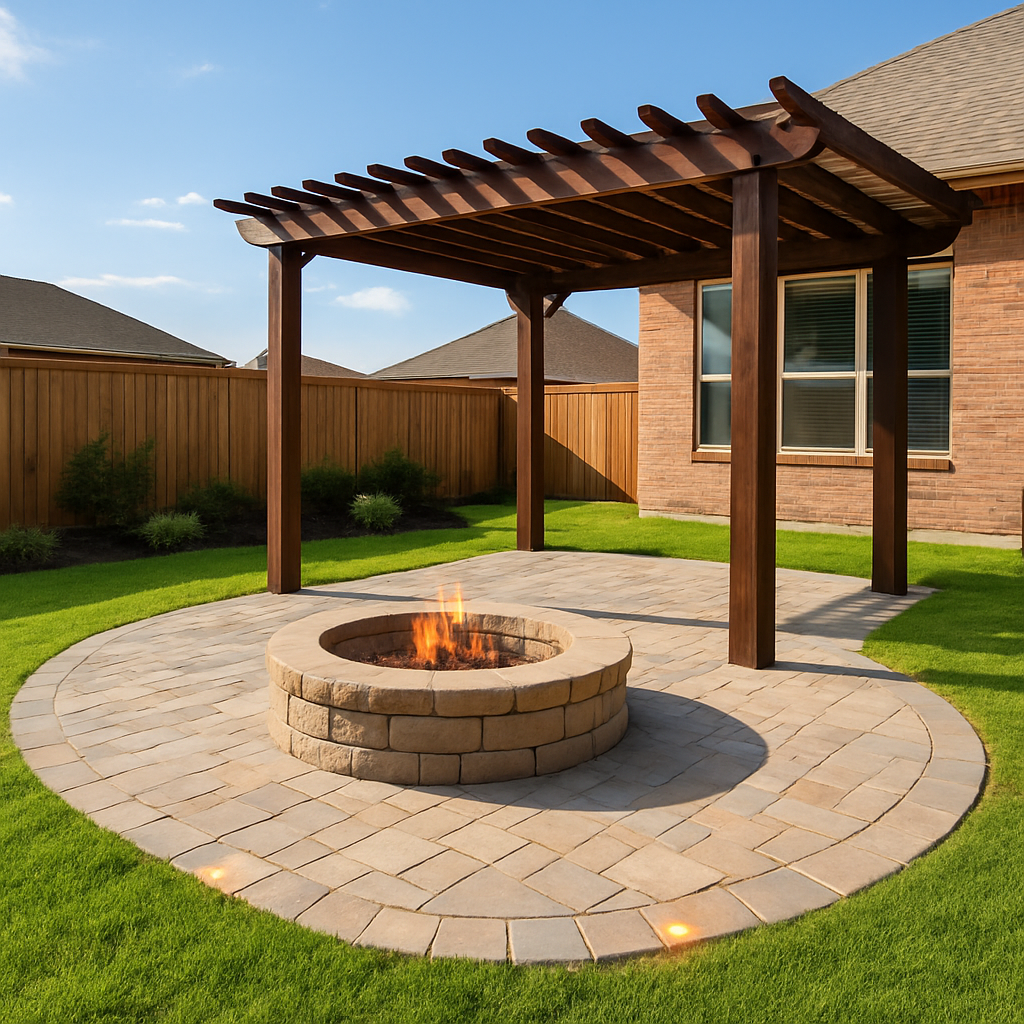
Permits, Regulations, and HOA Considerations
When you start mapping out a new patio, pergola, or outdoor kitchen, the first thing that can feel like a surprise is the paperwork. In Flower Mound, the city protects you (and your neighbor) by making sure every structure is safe, drains properly, and respects the look of the community.
Why permits matter
Think of a permit as a backstage pass. It tells the building inspector that the plans you’ve drawn up meet the town’s codes for things like footing depth, fire safety, and flood control. Without that pass, you could end up with a beautiful space that has to be torn down later – and that’s a nightmare for any homeowner.
We’ve seen projects stall for weeks because the contractor skipped the permit step. The cost of a delay usually outweighs the modest fee for the paperwork, so it’s worth treating permits as part of your budget from day one.
Common permits you’ll encounter
Most outdoor living projects fall into a few categories:
- Building permit: Required for any permanent structure – think pergolas, decks, or a built‑in fire pit enclosure.
- Electrical permit: Needed when you add low‑voltage LED lighting, outlets for an outdoor kitchen, or a hot tub pump.
- Plumbing permit: If you’re installing a sink, water line for a pet‑fountain, or a drainage system.
- Site‑work or grading permit: Any time you’re moving earth to create a 2% slope for drainage.
The city’s online portal lets you submit plans, pay fees, and track the review status. A quick tip: keep a copy of the approved plan on site – the inspector will ask for it.
Getting through the city’s building department
Here’s a simple flow we’ve refined with years of experience:
- Ask your outdoor living contractor to draft a set of stamped plans that include dimensions, materials, and slope calculations.
- Submit the plans through the Flower Mound Building Information portal. You’ll need the property’s parcel number and a brief description of the work.
- Pay the permit fee – it usually ranges from $100 to $300 for a residential patio, but can climb if you’re adding a pool deck.
- Schedule the inspection. The city typically conducts a rough‑in check after the base is laid, then a final inspection once everything is sealed and lit.
If the inspector flags an issue, you’ll get a correction notice. Most contractors can adjust the base or lighting layout on the spot, so don’t panic.
HOA rules: the hidden hurdle
Even if the city gives you a green light, the homeowners association can add another layer of approval. Many Flower Mound neighborhoods have covenants that dictate fence height, color palettes, and even the type of stone you can use.
Before you sign a contract, request a copy of the HOA’s design guidelines. Look for sections titled “Exterior Structures,” “Landscaping,” or “Lighting.” If you’re unsure whether a pergola’s height is allowed, ask the HOA board for a written clarification – it saves you from a later surprise.
One common HOA snag is the requirement for a “landscape buffer” around a new patio. That usually means planting native shrubs or using a low‑profile stone border. It’s an easy fix, but it does add a few extra steps to the timeline.
Checklist to keep you on track
Grab a notebook or use a digital checklist. Tick each item as you go – it helps you see the whole picture and avoids missed steps.
- Confirm contractor is licensed and insured in Texas.
- Ask for a written list of required permits (building, electrical, plumbing, grading).
- Submit plans to the Flower Mound Building Department and note the tracking number.
- Obtain HOA design approval before any material is ordered.
- Schedule rough‑in inspection after base is compacted.
- Schedule final inspection after pavers are set, sealed, and lighting is wired.
- Keep copies of all permits, inspection reports, and HOA correspondence on site.
By treating permits, city codes, and HOA guidelines as integral parts of the project, you’ll keep the timeline smooth and avoid costly re‑work. In the end, a well‑approved backyard feels less like a construction site and more like the extension of your home you’ve always wanted.
Conclusion
After digging through permits, budgets, and contractor interviews, the biggest truth is simple: the right outdoor living contractors Flower Mound TX can turn a chaotic to‑do list into a backyard you actually want to spend time in.
Think back to the moment you imagined sipping coffee by a fire pit while the kids play nearby. If you’ve followed our checklist—confirm licenses, get written permits, test shade, and set a 2 % drainage slope—those moments are already within reach.
So, what’s the next step? Grab that notebook, mark the items you’ve checked off, and schedule a quick site visit with a contractor who listens. In our experience, a brief walkthrough where you point out the oak tree or the pet‑water fountain can save weeks of re‑work.
And remember, a solid warranty and a post‑install walk‑through aren’t just nice‑to‑haves; they’re the safety net that keeps your investment humming for years.
Ready to move from plan to patio? Reach out, ask for a 3‑D rendering, and let the transformation begin. Your backyard’s next chapter starts now.
When you finally flip the switch on those low‑voltage LEDs, notice how the space feels different—cozy, welcoming, ready for a night of stories and stargazing. That little moment is the payoff for every permit you filed and every slope you measured.
Lastly, keep your checklist handy even after the project wraps. A quick yearly review of drainage, sealant condition, and lighting connections will keep your patio looking fresh and functional for the next decade.
FAQ
What should I look for when hiring outdoor living contractors in Flower Mound TX?
First, check that the contractor is licensed and insured in Texas and has a portfolio that includes the three zones you care about—cooking, relaxing, and play. Ask for before‑and‑after photos of similar projects, and pay attention to details like drainage slope and shade solutions. A good sign is when they can walk you through the math behind a 2 % drainage grade.
In our experience, contractors who bring a tablet to the site and let you move symbols around keep the process transparent and reduce surprises later.
Do I need permits for a patio or pergola in Flower Mound?
Yes. The city requires a building permit for any permanent structure, plus an electrical permit if you add lighting or outlets. A grading permit is also needed when you create a 2 % slope for drainage. Skipping these steps can halt the project and cost you extra money to redo work.
Ask your contractor to provide a copy of the stamped permit set before the first shovel hits the ground—that way you’re covered from day one.
How much does a typical patio installation cost in Flower Mound?
Most homeowners see a range of $12‑$18 per square foot for a mid‑range patio, which includes excavation, base preparation, pavers, joint sand, sealant, and labor. Keep an eye on hidden line items—if the quote excludes the 2 % slope or drainage pipe, you could be looking at an extra $0.30‑$0.50 per square foot later.
A solid estimate will break down each bucket: site prep, materials, labor, and a 10 % contingency, so you know exactly where every dollar is going.
Can I customize lighting and pet‑friendly features with local contractors?
Absolutely. Low‑voltage LED strips, uplights, and warm‑tone bulbs can be mixed to create zones for dining, lounging, or a kids’ play area. For pet owners, a weather‑proof, IP65‑rated outlet for a water fountain is a quick $120 upgrade that saves headaches down the road.
When you discuss these details, ask the contractor to show you a simple layout—most will sketch it on a tablet so you can see power placement before anything is installed.
What’s the best way to verify a contractor’s licensing and insurance?
Start by requesting the contractor’s Texas contractor’s license number and insurance certificate. You can verify the license on the Texas Department of Licensing and Regulation website. For insurance, make sure the policy covers both general liability and workers’ compensation, and ask for a copy that lists your project address.
Never rely on a verbal promise; a written, up‑to‑date certificate protects you if something goes wrong on site.
How long does a full outdoor living project usually take from design to finish?
From the initial site walk‑through to the final walk‑through, most backyard projects in Flower Mound run 4‑6 weeks, assuming weather cooperates and permits are approved early. The design phase, including a 3‑D rendering, can take 1‑2 weeks, while excavation and base work usually need 3‑5 business days.
Delays often happen when permits get held up or unexpected soil conditions appear, so build a small time buffer into your schedule.
What maintenance should I plan for after my outdoor living space is completed?
Schedule a yearly check of the drainage slope, sealant condition, and lighting connections. Clean paver joints with a pressure washer no more than once a year to avoid damage, and reapply a sealant every 2‑3 years to keep stone from fading under the Texas sun.
Keeping a simple checklist on your phone helps you spot issues early—think of it as a quick health exam for your backyard.